
Product Design · Healthcare · 2024
Helping surgeons decide faster and with more confidence
A mobile decision-support tool for spinal surgeons — turning 20+parameters into a clear, trustworthy recommendation in
under 8 minutes.
9:41
Back
What is Your Patient Height?
Height in Feet/ Inches
6’ 1”
5’ 11”
5’ 10”
6’ 1”
6’ 0”
6’ 3”
6’ 2”
Imperial
Metric
Save
9:41
Back
Select Level

L1-L2

L2-L3
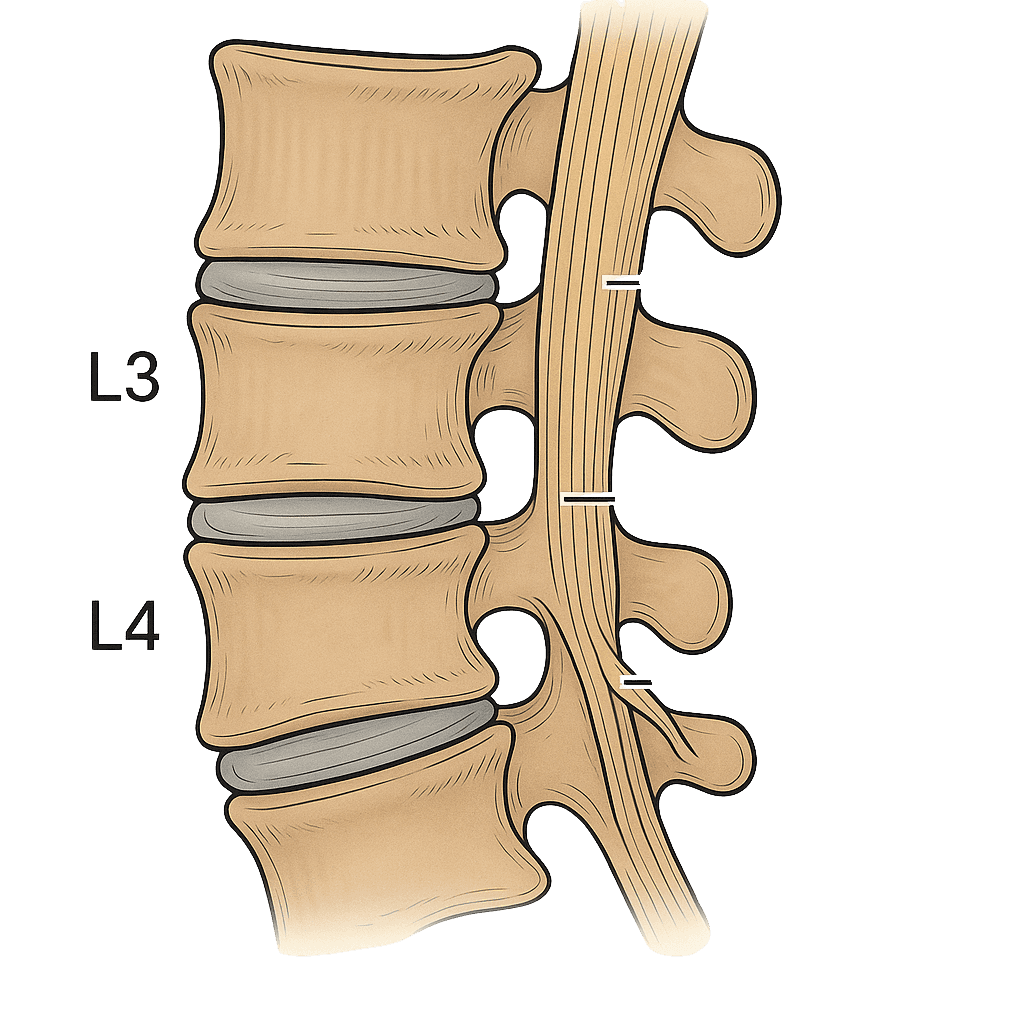
L3-L4

L4-L5

L5-S1
Generate Results

Hello,
Dr. Andrew Smith
Search...
Recent Patients
View all

Jason Smith
L1-L2
5 Oct
10:30pm
Jason Smith
L1-L2
5 Oct
10:30pm
9:41

Start Diagnosis
Recent Tests
View all

Shawn Miller
Screw Type | way of surgery
10:30am - 5:30pm
View Results
Shawn Miller
Screw Type | way of surgery
10:30am - 5:30pm
View Results
Shawn Miller
Screw Type | way of surgery
10:30am - 5:30pm
View Results
9:41
Back
L1 -L2
Endplate Measurements (mm)
Superior AP
Add Patient’s Weight
Superior ML
Add Patient’s Weight
Inferior AP
Add Patient’s Weight
Inferior ML
Add Patient’s Weight
Disc Heights (mm)
Anterior Height
Weight
Middle Height
Weight
Posterior Height
Weight
Segmental Lordosis (degrees)
Current Angle
Weight
Pathology Findings
Facet Fusion
Yes
No
Severe Stenosis Present
Yes
No
Spondylolisthesis Grade
Add Patient’s Weight
Surgical Risks
Previous Abdominal Surgery
Yes
No
Previous Abdominal Surgery
Yes
No
Unfavorable Vascular Anatomy
Yes
No
Iliac Crest Obstructs
Yes
No
Clear
Save
9:41
Back
Patient Details
Upload
Phone No *
+1
Full Name *
Age *
Gender *
Address
Continue
The Problem
The tools weren't built for how surgeons think
01
Cognitive Overload
Evaluating patient data,imaging, guidelines,and implant options simultaneously — no structure, no system.
02
No Standardised Workflow
Decisions lived in surgeons' heads. No audit trail, no way to verify which parameters were considered.
03
Desktop-Only Tools
Existing software required keyboard-first input. Surgeons needed something usable on mobile — in the ward, in consult, pre-operation.
"I know what I need to decide — I just need a way to get there without holding it all in my head at once."
— Research & Strategy
Shaped by real-world insights from a practicing spine surgeon
Built through continuous collaboration with a US-based surgeon, using real patient cases and workflows to guide every design decision.
1
Lead Surgeon (Client)
20+
Parameters per Decision
Real
Case-based Insights
End-to-End
Workflow Understanding
Clinical thinking is spatial
Surgical decisions are made by visualizing anatomy, not filling forms. Interfaces must reflect this mental model.
Structure reduces cognitive load
Breaking the workflow into guided steps prevents missed inputs while keeping the process manageable.
Step-by-step progression
Clear progress indicators
Contextual inputs
Trust requires transparency
Surgeons need to understand the reasoning behind a recommendation before trusting it. Black-box outputs are not acceptable.
Designed for real clinical use
The interface must perform reliably in fast-paced environments with minimal interaction friction.
Large touch targets
Readable in all lighting conditions
Quick, one-handed navigation
User Flow
7 Screens. One Guided Diagnosis.
A structured clinical workflow that transforms patient data into precise surgical recommendations.
1
Authentication
Secure login for authorized clinical access.
→
2
Start Diagnosis
Begin a new case with a guided diagnostic flow.
→
3
Patient Details
Enter essential patient information for case setup.
→
4
Patient Anatomy
Capture anatomical inputs critical for evaluation.
→
5
Sagittal Alignment
Assess spinal alignment parameters for accuracy.
→
6
Level Selection & Clinical Form
Select the affected level and input structured clinical data.
→
7
Surgical Recommendation
Generate an instant, data-driven treatment suggestion.
Key Screens
Design decisions that moved the needle
9:41
Back
Select Level
L1-L2
L2-L3
L3-L4
L4-L5
L5-S1
Continue
01
Level Selection
Think visually, not textually.
Users select the spinal level directly from an anatomical visual grid that matches the
way imaging is read - top to bottom.
DESIGN DECISIONS
→
Anatomical order mirrors how imaging reads — top to bottom.
→
Multi-select with visual confirmation; no nested dropdowns.
→
Touch targets sized for gloved hands.
Replacing a drop down with a spatial list cut level selection time
by 40%.
02
Level-Based Clinical Input
Context-driven input, tailored to selection.
The form dynamically adapts based on the selected spinal level, allowing
users to enter only relevant measurements and clinical findings.
DESIGN DECISIONS
→
Form adapts to the selected spinal level
→
Sectioned inputs for measurements, pathology, and risks
→
Standardized fields for consistent data entry
→
Single-screen flow to reduce interaction time
Level-based forms reduce unnecessary inputs and improve diagnostic efficiency by focusing only on relevant data.
9:41
Back
L1 -L2
Endplate Measurements (mm)
Superior AP
Add Patient’s Weight
Superior ML
Add Patient’s Weight
Inferior AP
Add Patient’s Weight
Inferior ML
Add Patient’s Weight
Disc Heights (mm)
Anterior Height
Weight
Middle Height
Weight
Posterior Height
Weight
Segmental Lordosis (degrees)
Current Angle
Weight
Pathology Findings
Facet Fusion
Yes
No
Severe Stenosis Present
Yes
No
Spondylolisthesis Grade
Add Patient’s Weight
Surgical Risks
Previous Abdominal Surgery
Yes
No
Previous Abdominal Surgery
Yes
No
Unfavorable Vascular Anatomy
Yes
No
Iliac Crest Obstructs
Yes
No
Clear
Save
Exported Clinical Report (PDF)
Download PDF
Patient Report
ID: REF-99023-XLS
Octagonal Sage
Date: October 14, 2023
PATIENT DETAILS
Name:
Jonathan A. Miller
MRN:
445-098-223
DOB:
May 21, 1968 (55Y)
Sex:
Male
INPUT PARAMETERS
PELVIC INCIDENCE
54.2°
LUMBAR LORDOSIS
32.1°
SVA OFFSET
72mm
SURGICAL RECOMMENDATIONS
CATEGORY
RECOMMENDATION
STATUS
Approach Selection
Posterior-Only Decompression
PRIMARY
Interbody Device
Not recommended (Anatomy
constraint)
EXCLUDED
Instrumentation
Pedicle Screws L1-L2
(6.5mm x 45mm)
OPTIMAL
CLINICAL NOTES
L1–L2 spondylolisthesis with facet hypertrophy. ALIF preferred for lordosis, but unsafe due to limited vascular access (<10mm).
CONTRAINDICATIONS
Vascular Risk: Iliac artery crossover at the L1-L2 disc space.
Bone Quality: DEXA scan indicates T-score of -2.4 (Osteopenic).
WARNINGS & COMPLIANCE
This recommendation is generated by an automated clinical decision support system. It is intended to assist, not replace, the professional judgment of a board-certified surgeon. All measurements must be verified against primary imaging (CT/MRI) before final plan execution.
03
Surgical Recommendations.
From data to decision, instantly.
The system transforms clinical inputs into a structured surgical report, highlighting key measurements, risks, and recommended approaches for
the selected level.
DESIGN DECISIONS
→
Outputs structured into clear sections ( patient, measurements, risks,
recommendations.)
→
Critical alerts and contraindications clearly highlighted.
→
Combines numerical data with actionable insights.
→
Exportable as a standardized clinical report (PDF)
Recommendation Summary
Target Level
L1-L2
Approach
Not viable (Interbody)
Posterior Decompression only
CAGE SIZE
44.8 x 18.4 x 10 mm
LORDOSIS correction
-17 degrees
Posterior Decompression
L1-L2
CRITICAL INSIGHT
Severe ossification of the posterior longitudinal ligament noted. High risk for dural tear during decompression.
Transforming fragmented clinical inputs into a clear, actionable report improves decision-making speed and confidence.
Outcomes
Measurable results
55%
Faster Decisions
15–20 min → under 8 min
94%
Data Completeness
Up from 68%
↓
Decision Variance
Standardised workflow
"It feels like a second opinion from a highly experienced colleague."
Senior Spine Surgeon · Post-launch Feedback
Reflection
What I learned
Simplicity ≠ fewer steps
Cognitive ease comes from predictability and clear progression — not collapsing steps that need to exist. 7 screens, effortless flow.
Trust is designed, not assumed
Surgeons don't want magic — they want clarity. Showing the "why"behind every recommendation became the foundation of adoption.
Experts need structure, not hand-holding
Surgeons don't want magic — they want clarity. Showing the "why"behind every recommendation became the foundation of adoption.
Visual thinking beats forms
When interfaces mirror how experts already think, adoption becomes frictionless. Replacing dropdowns cut selection time by 40%.
The goal was never to replace surgeons' decisions — it was to make those decisions easier
to reach, and easier to stand behind.